

Switzerland is a “robotics country,” and its innovators are at the forefront of moving robots from industrial cages into daily life. This transition is driven by urgent societal needs, particularly the “nursing crisis” and a widespread “skilled labor shortage”. An episode of “Next in Business,” supported by Deep Tech Nation Switzerland and the Gebert Rüf Stiftung, explores how Swiss robots are being tested in everyday environments to support, not replace, humans.
A prime example is Reha Zihlschlacht, a rehabilitation clinic that has integrated robots into its daily workflow for over six years. Vamed CEO Michèle Bongetta explains the project’s goal: to “support skilled personnel”. The robots, nicknamed Lia and Lio, are treated as team members and handle simple, repetitive logistics. Nurse Diana Pereira Vidigal demonstrates how Lia transports newspapers, bread, and blood samples, allowing the nursing staff to “take care of patients”. Bongetta emphasizes this human-centric philosophy: “Robots are there to assist and support, but not to replace”.

This philosophy is shared by F&P Robotics, one of the companies developing these systems. CEO Michael Früh explains that his vision is to “support employees in repetitive tasks so that they have more time… for human interaction”. F&P Robotics, whose roots trace back to the AI Lab at the University of Zurich, also makes a conscious design choice to “alleviate a lot of fear” by ensuring their robots are “recognizable as a robot,” not as unsettling humanoids.
The “NextIn Business” episode also showcases Swiss innovation in logistics. RIVR Robotics, led by CEO Marko Bjelonic, is tackling the “last-mile” delivery problem. While many robots fail at the doorstep, RIVR’s robot is designed to do what others cannot: “climbing stairs”. This technology, which originated as a spin-off from ETH Zurich’s Robotic Systems Lab, aims to automate food and parcel delivery. The market driver is clear: delivery demand is increasing, but “it is simply not possible to find enough workers who want to do this job”. This venture has attracted high-profile investors, including Amazon founder Jeff Bezos.

The integration of robots into society raises important questions, as noted by interviewee and former TV presenter Kurt Aeschbacher. He sees great potential but stresses that robots cannot replace “intuition… feeling, sensing”. Instead, they should be used to relieve humans of tedious routine tasks, which are “not the most exciting jobs”.
From hospital corridors to urban sidewalks, the Swiss deep tech ecosystem is deploying robots that augment human capabilities. The goal is not full automation but optimal integration, freeing people from drudgery to focus on work that requires a uniquely human touch.
More Content
-
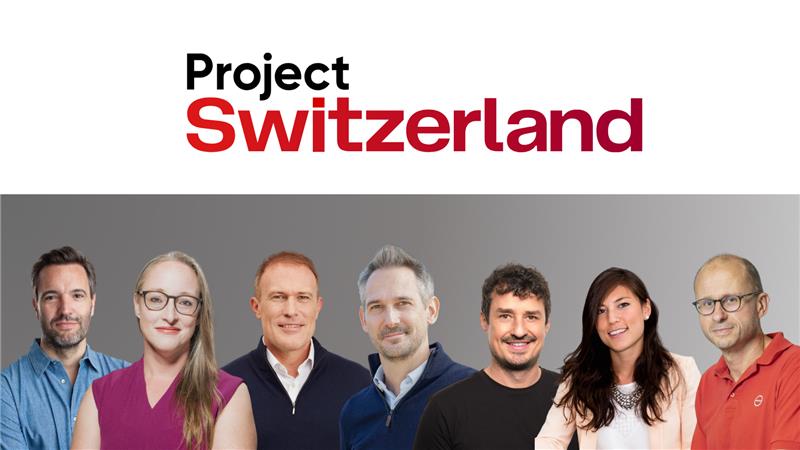
Today marks a defining moment for the Swiss innovation ecosystem. Deep Tech Nation Switzerland officially launching Project Switzerland, a national initiative with a singular, critical…
-

More money has flowed into all Swiss scale-ups per capita than into scale-ups in the US or Israel. This is backed by a ten-year growth…
-

Impatience is Imperative There is a distinct cultural friction when a Swiss founder steps into the US market. In Switzerland, the prevailing operating system is…


