/
NextIn Business: Swiss Biotech Battles Superbugs – Deep Tech Solutions to Antibiotic Resistance


Modern medicine faces an existential threat: multi-resistant bacteria. As vital antibiotics “no longer work”, infections once easily treated are becoming life-threatening, and routine procedures like surgery are becoming incredibly risky. This crisis is so severe that global health authorities, in landmark reports like the O’Neill Review on Antimicrobial Resistance, project that drug-resistant infections could cause 10 million deaths annually by 2050 if no action is taken.
In its final episode, the “Next in Business” series, supported by Deep Tech Nation Switzerland and the Gebert Rüf Stiftung, investigates how Swiss startups are developing a new generation of diagnostics and antibiotics to fight this war.
Dr. Michael Peter Keller, an infectiologist at University Hospital Basel, sees this “race against time” daily. “Twenty years ago we had practically none,” he says of multi-resistant bacteria. “Today we have two to four samples from patients every day that contain bacteria that are more difficult to treat”.
Swiss deep tech is attacking this problem on two fronts: diagnostics and therapeutics.

First, in diagnostics, Resistell, led by CEO Danuta Cichotzka, is solving the critical bottleneck of time. Traditional lab cultures take days to determine if a bacterium is resistant. Resistell’s platform uses “nanomotion technology” to detect the “tiny vibrations from living cells”. By applying artificial intelligence to these signals, it can provide an accurate answer on resistance in “two hours”. This speed allows doctors to “guide the treatment” with the correct antibiotic from the start, rather than guessing with broad-spectrum drugs.
Second, in therapeutics, BioVersys is developing new antibiotics to refill the world’s depleted arsenal. CEO Marc Gitzinger explains that while “Big Pharma largely withdrew from antibiotic research a few years ago,” that trend is “starting to reverse”. His company, which is now globally operated and listed on the stock exchange, has secured the capital to complete its late-stage clinical trials. Gitzinger states, “We hope to receive approval for our first drug in 2028”.

The “Next in Business” episode also features Dr. Fabian Unteregger, a physician and comedian, who notes that new tools like artificial intelligence are making this research economically viable again. AI can “find active ingredients much faster” and “shorten the time it takes to bring them to market”.
This combination of AI-powered rapid diagnostics from companies like Resistell and new drug development from companies like BioVersys showcases the strength of Switzerland’s biotech ecosystem. This strength is a key finding in national publications like the Swiss Deep Tech Report, which analyzes the country’s innovation pipeline. By fostering interdisciplinary R&D, Swiss deep tech is developing critical tools to solve one of the most pressing global health problems.
More Content
-
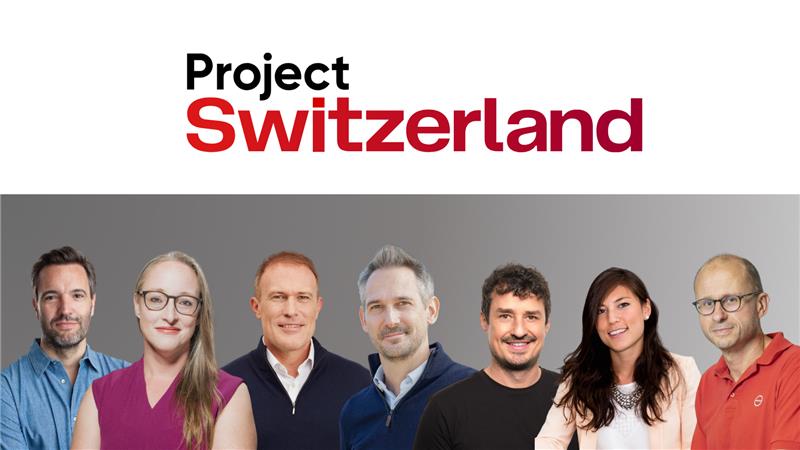
Today marks a defining moment for the Swiss innovation ecosystem. Deep Tech Nation Switzerland officially launching Project Switzerland, a national initiative with a singular, critical…
-

More money has flowed into all Swiss scale-ups per capita than into scale-ups in the US or Israel. This is backed by a ten-year growth…
-

Impatience is Imperative There is a distinct cultural friction when a Swiss founder steps into the US market. In Switzerland, the prevailing operating system is…


